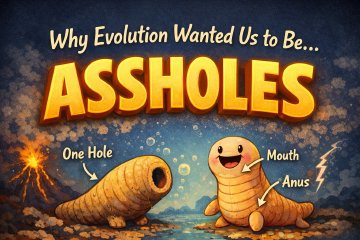
Why Evolution Chose Assholes (It's Not What You Think)

Discover why the anus was a key evolutionary innovation, enabling efficient digestion and shaping life as we know it. No, really. The Surprising Role of the Anus in Evolution Evolution’s most underrated upgrade? The anus. The anus allowed a one-way digestive system, separating intake and waste. As a tech guy, I would describe it as going from batch processing to streaming. This shift enabled: Continuous feeding without blockages Specialized gut regions for nutrient extraction Larger body sizes and more efficient energy use The One-Opening System: Limitations of Early Life The one-opening system where early life ate and excreted through the same hole had key limitations that constrained growth and efficiency. ...

January 5, 2026 · 2 min · 384 words · Felix Müller

The Legacy of Tandem Computers and NonStop Systems

Redefining Computing Through Reliability In an era when downtime could spell disaster for businesses, Tandem Computers Inc. introduced a groundbreaking solution: the NonStop system. Designed for unparalleled reliability, these systems ensured continuous operation, setting a new standard in computing. Tandem’s NonStop Systems Founded in 1974, Tandem Computers shipped its first system, the Tandem/16, to Citibank in 1976, marking the beginning of fault-tolerant computing. The NonStop systems were built on a unique architecture that allowed them to operate continuously, even in the event of component failures. This was achieved through a sophisticated setup of up to 16 CPUs in a fault-tolerant cluster, each with its own memory, I/O processor, and I/O bus, ensuring data availability through mirrored disks and redundant paths​​. ...

January 30, 2024 · 2 min · 384 words · Felix Müller

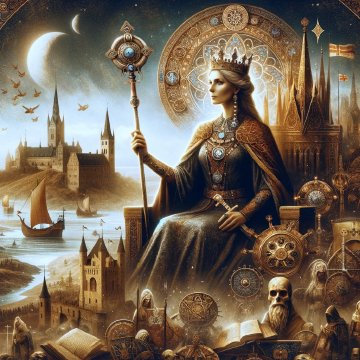
The Enigmatic Legacy of Queen Margaret I and the Myths of Her Son Olaf

Today, I learned about the fascinating and influential figure of Queen Margaret I, who reigned over Denmark, Norway, and Sweden in the late 14th and early 15th centuries. A woman of formidable intellect and diplomatic skill, her story intertwines with the intriguing myths surrounding her son, Olaf. Margaret I: A Trailblazer in Scandinavian History Born in 1353, Margaret was the youngest daughter of King Valdemar IV of Denmark. She married Haakon VI of Norway at the age of ten and gave birth to their son, Olaf. Following the deaths of her husband and son, Margaret ascended to power, becoming the de facto ruler of the Scandinavian kingdoms, a rare feat for a woman in that era. Known for her wisdom and strong will, she intended to unite Scandinavia into a single entity capable of resisting the Hanseatic League’s dominance. Her regency marked the start of the Dano-Norwegian Union, which lasted over four centuries. Despite some criticism for favoring Denmark and being autocratic, Margaret was highly regarded in Norway and respected in Denmark and Sweden. ...

January 3, 2024 · 2 min · 356 words · Felix Müller

The Fascinating Origins of Boxing Day

Hello everyone! Today, I’m diving into a topic that blends history with holiday tradition – the origins of Boxing Day. Celebrated on December 26th, this day holds more than just post-Christmas relaxation or shopping sprees; it’s steeped in rich historical practices. Let’s unwrap the story behind Boxing Day. The Historical Roots of Boxing Day What’s in a name? The term “Boxing Day” might conjure images of sports, but its name actually comes from a more charitable practice. Traditionally, in the UK, it was the day when servants received Christmas boxes filled with gifts or money from their employers. This was a token of appreciation for their year-long service. ...

December 27, 2023 · 2 min · 266 words · Felix Müller